
Friends,
Over the past three-plus years I have written 15 quarterly newsletters. In this letter I want to provide a brief summary of the first seven and provide a link to the more detailed letter should you wish to know more about the subject covered. I hope you find this of value. I will cover the remaining 8 in my next newsletter. If you have any trouble retrieving any newsletter from the link provided, please email me and I will send you a copy.
Those of you who have stuck with me and found these newsletters of interest … THANK YOU!
Newsletter #1: Altruistic Leadership
People within an organization give power to those who act in their collective best interest. When leaders don’t act in their collective interest but act in a self-centered, privileged way, the followers will eventually undermine their power. In numerous studies across a broad range of arenas (manufacturing plants, banks, schools, hospitals) those who lead most successfully practice five general ways of behaving known as the “Big Five.”
- Enthusiasm – They reach out to others.
- Focus – They focus on shared goals.
- Kindness – They share, cooperate with, and care about others.
- Calmness – They instill calm, perspective … they are the eye of the storm in challenging times.
- Openness – They are open to others’ ideas, feelings, needs.
So, the conclusion I come to is that “being altruistic/kind” leads to more effective leadership and organizational performance.
The newsletter goes on to describe how the power that comes with leadership actually leads many leaders to abandon the “Big Five” due to what is known as “The Power Paradox.”
Newsletter #2: Altruistic Leadership
Here is my definition of leadership:
“Humans have an innate capability to dream, think, learn and, most importantly, ACT in a collective integrated manner to achieve almost anything they can conceive. Leadership is the act of enabling this capability.”
I further believe that leadership consists of only two things: purpose and relationships. An organization comes together to achieve some purpose or set of purposes and it has some complex web of relationships that enables (or doesn’t enable) the achievement of that purpose. Therefore, leadership consists of only these two fundamental tasks: clarifying purpose and enhancing relationships. It is that simple … and that complex!

Within that context of purpose and relationships, here is my model of leadership. Leadership consists of four fundamental steps, the first three dealing with purpose and the fourth dealing with relationships.
- Vision: Creating an inspiring picture of the organization’s future.
- Reality: Understanding and facing the reality.
- Pathways: Building the pathways (strategies/objectives/measures/plans) that lead to the vision.
- Culture: Creating the work environment that fosters involvement, engagement, enables trust, effective resolution of differences, commitment to purpose, and effective teamwork.

The newsletter provides more detail concerning purpose and relationships and the above 4 steps.
Newsletter #3: Resilience and Growth
There are four possibilities when we face a crisis or setback. We can become a victim, we can survive, we can recover or we can thrive and experience what psychologists refer to as “posttraumatic growth” (PTG). Having experienced my own setbacks and at times becoming a victim and at other times thriving, I will be writing from personal experience. My hope is that this provides ideas on how to thrive in adversity.

The things that really hurt in life spare no one. We all experience painful setbacks in life. No one lives a charmed life. So, perhaps the first step in better dealing with setbacks is to form a somewhat different perspective on setbacks than most of us carry. We tend to view events as either favorable or unfavorable. Maybe in the short term, this works, but longer term, we may not be very good at predicting the outcome of the things we view as setbacks. My guess is that each of us looks back at certain setbacks and can see how they have made our lives better. The high school sweetheart who broke up with you and you see at your high school reunion, the lost job, the house you wanted to buy but failed to get … these often lead to far better places.
The newsletter then provides 10 ideas on how to be more resilient, to thrive versus becoming a victim.
Newsletter #4: Flourishing in the 2nd Half of Life
During the first half of life, most of us are devoted to finding our place in the world. We focus on becoming responsible and productive adults, taking our rightful place in society – whatever we conceive this to be. We seek to find our place in terms of work, family, community, and among our friends. The development of a strong, sturdy ego is the goal – and rightfully so. It is difficult to grow beyond our ego if it remains desperately unfulfilled. We build what James Hollis calls our “provisional personality,” often more guided by the expectations of others than by a deeper sense of self we might find within. Most of us arrive at midlife with a mixture of triumph and tragedy, accomplishment and broken dreams. While the ego has been guiding much of this, some inner voice begins to stir … asking to be increasingly recognized and valued. The result for many of us is increasing tension between our provisional self and what might be considered our inner path.

Source: James Hollis
With the 2nd half we experience a myriad of changes that foster a deeper introspection. Children leave home (or boomerang!), our work changes, signs of age become increasingly apparent, relationships evolve. Our first response to these changes is most likely to double down on what we have done before. Sometimes the more successful we are in our first half, the more difficult we have moving to the 2nd half. But then what film makers call an “inciting incident” occurs that forces a reckoning – a major health challenge, a lost job, a broken relationship shakes our world. Often, we think of this as the ending of what was supposed to be, when perhaps it is the beginning of what was meant to be. The inciting incident, can be a vehicle by which we move to an even deeper, more meaningful and joyous life, if we but listen to its call.
The newsletter then explores the transitions we must make to live a full, meaningful, joyful 2nd half of life.
Newsletter #5: Enabling People to Flourish
The science of positive psychology defines flourishing as “living within an optimal range of human functioning, one that connotes goodness, generativity, growth and resilience.” To measure whether someone is flourishing, researchers look for a set of qualities that are captured in the acronym “PERMASOR.” Let me explain. Those who flourish have the following qualities:
- Positive emotions – They experience more positive emotions such as joy, gratitude, hope, inspiration and peace, and fewer negative emotions such as fear, anger, remorse and jealousy.
- Engagement – They are engaged in life.
- Relationships – They have healthy, enduring relationships.
- Meaning – They feel their life has value and worth.
- Accomplishment – They set and achieve goals.
- Self-esteem – They like themselves feeling both worthy and confident.
- Optimism – They have a positive outlook concerning the future.
- Resilience – When they encounter setbacks they bounce back quickly.
The newsletter then outlines how we do in the US in terms of flourishing versus other countries.
Newsletter #6: No Greatness without Goodness
I believe organizations that are the most successful in the marketplace are those that aspire to benefit the world in some powerful and unique way. They have at their core “goodness.” Here is a good example.
In 2005, when Randy Lewis, Senior Vice President of Walgreens, set out to build in Anderson, SC, the most efficient distribution center in the world, he decided he was going to staff one-third of the workforce with people with disabilities (mental disabilities, physical disabilities, every kind of disability), paying them the same while holding them to the same standards as others. Randy, whose son has autism, knew deep down that many people with disabilities could hold jobs and even perform better than the average worker … if only given a chance. He bet his career on making the world a better place through capitalizing on an often-marginalized group of people.
What began at the Anderson facility has spread throughout Walgreens. Today at the Anderson facility 40% of the workforce has disabilities. The Hartford, CT facility soon followed with a workforce that is now 50% disabled. Here is the incredible thing … this didn’t just benefit those with disabilities, it benefitted everyone associated with Walgreens. Anderson and Hartford are the two most efficient distribution centers in the Walgreen distribution system. At the two facilities 85% of those hired 5 years ago are still with the company. Today 10% of Walgreens’ total workforce is disabled. Here is how Randy describes what happens: “As we began to see people with disabilities as equals, it changed the way we worked. It changed our culture. It changed our work environment. It changed the way we looked at the world. We didn’t know what a team really was until this all happened. We found the satisfaction of our own success didn’t compare to the joy of helping another person succeed.”
The newsletter goes on to describe different organizations that capitalize on associates’ desire for “transcendence,” the desire that their work has meaning and value beyond just themselves.
Newsletter #7: Mastering the Stories We Tell Ourselves
Most of us think the world works like this. There is an event, that event makes us feel a particular way and then we act upon this feeling.

What actually happens is that between the event and how we feel something occurs … and that is that we tell a story. Importantly, it is the story, rather than the event, that we act upon.

Change the stories and we change our lives.
Case in point, our reactions are not determined by the event, but by the stories, we tell ourselves. Now we tell ourselves a thousand stories a day. And some stories, like this story, we tell once and are of little consequence to our lives. Some stories we tell over and over for a lifetime and shape the very character of our lives. We tell stories about work, family, relatives, friends, health, happiness, money, what we can do, what we can’t do, about our boss, about our coworkers … you got the idea, we tell stories about everything and everyone. Some of little consequence. Some are incredibly debilitating.
The newsletter then suggests ways to change the stories we tell ourselves to have more successful, meaningful, and joyful lives.
Well, that is the summary of the first seven letters. I have learned a lot by writing these letters. I hope it has had some value for you, the reader, as well.
Be well.

–Douglas. A. Smith
“A man may be a fool and not know it,
but not if he is married.”
–H. L. Mencken


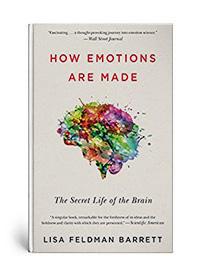
From the bookshelf!
Books I am reading and highly recommend.