
Friends,
| Welcome to my 26th newsletter. This one dealing with being in the present, something most of us, including your author, struggle to do. The technology that surrounds us, particularly our cell phones, makes being in the present exceedingly difficult. What connects us to the world, separates us from one another and from the present.
Happiness is found in the present. “Pooh asks: “What day is it?” Christopher Robin says: “It’s today.” Pooh says: “Oh today. My favorite day. All the yesterdays and tomorrows are just too many days to deal with.” Happiness, joy, awe, amusement, pride, serenity … most every positive emotion is most always experienced when we are in the present. Think back to when you had an incredibly happy experience … the birth of a child, getting married, a victory in a sporting event, an intimate experience with your spouse … in every one of these my guess is you were 100% in the present, not troubled by the past nor concerned about the future. Happiness is found in the present, but you must be there to experience it. When I taught a happiness class at DePauw University, on Friday I would tell students that on Monday we will have a guest professor who lives 100% in the present. He doesn’t carry any remorse or anger about the past, nor does he worry about the future. On Monday I walk in with Professor Norton, my son’s dog who has a bow tie and glasses. Norton does not care what happened yesterday and he doesn’t worry about whether he will get to play with his friend in the park tomorrow. He is concerned only with the moment he is currently living. We should all be more like Norton (other than drinking out of the toilet).
Doing now what I am doing now. “Eternal life is given to those who live in the present.” Wittgenstein So how do we do this, how do we live more in the present? I have four ideas to help you to live more in the present. Thresholds: The first is a simple concept known as “Thresholds.” Every time you pass through a doorway, you want to think of the doorway as a threshold. Once on the other side of the threshold, you will seek to be present with what is happening on that side of the threshold. For instance, when you drive home tonight and you pass from the garage into the house, think of that back door as a threshold. You will want to focus on what is happening on that side of the threshold, not what happened at work, or the guy who cut you off as you drove home, or the report that is due tomorrow at work. You want to focus entirely on what is going on at home and who you are with. If you need to do work at home and you have an office at home, pass through the office doorway and think of it as a threshold. Your family will know that when you are in your office, they should not disturb you. What you should not be doing is watching TV, reading the newspaper, talking to your kids and playing a computer game all at the same time. Likewise at work, when you pass through a conference room door, think of that door as a threshold such that you devote 100% if your attention to what is happening in the conference room. Sounds simple, but it is not. I was taught this concept 30 years ago and while it helps, I still struggle to have my head be where my feet are. Meditation: It is no secret that meditation is simply a tool to enable you to be 100% in the present without judgment. For most of us, meditation is difficult. We find that despite seeking to focus completely on our breath, within seconds we are thinking about the past or the future. The discipline is to not judge ourselves but simply think of this wandering as an opportunity to return to the present. If you find meditation difficult, try guided meditation which makes it a little easier to be in the present. This is not a tutorial on meditation, but there are lots of resources online if meditation is new to you and you want to practice it. Yoga: Yoga can provide three primary benefits: improved nervous system function, joint range of motion and dynamic balance. But it can also provide mental discipline by helping achieve peacefulness of body and mind and the ability to better manage stress and anxiety by bringing you totally into the present. I must admit I am not a practitioner of yoga, and I am sure it would not provide these benefits if it were practiced as I might practice it and as illustrated below.
Thank you for reading. Send along any thoughts you have on these. Be well … better yet thrive. |



–Douglas. A. Smith
“Flourishing is a combination of feeling good and functioning effectively. It is synonymous with a high level of mental well-being and it epitomizes mental health.”
— Felicia A Huppert

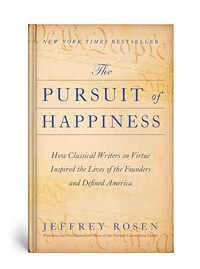
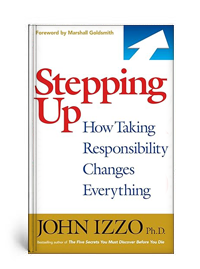
From the bookshelf!
Books I am reading and highly recommend.