
Friends,
| Welcome to my 25th newsletter. This one provides a brief description and link to the last seven letters, newsletters 18 to 24. As such it is a little longer than usual. Sorry.
Newsletter 18: Five Ways to Develop Better Relationships .Living with others is difficult, living without others is impossible. The skill of being in healthy relationships is vitally important to successful living and, like any skill, the skill of having positive relationships is a skill that can be improved. Here are the five tools that lead to better relationships. I have fleshed out the first, the other four are described in detail in the 18th newsletter.
http://whitepinemountain.com/blog/2022/04/02/five-ways-to-have-better-relationships/ Newsletter 19: Thinking in the Second Half of Life Our minds, our thinking ability, our intelligence changes in the second half of life – starting in our late 30’s! Most of us perceive these changes negatively, but most often it is more of a transition than a decline. Yes, our ability in the second half of life to recall names, facts, events and to think creatively declines with age. This form of thinking is referred to as “fluid intelligence.” But here is the good news … another form of intelligence, “crystallized intelligence,” blossoms in the second half of life and often continues to increase until well into our 70’s and 80’s. This type of intelligence enables us to better understand and use concepts, to connect things that we previously saw as unrelated, to understand things at a deeper level and to form deeper, more meaningful relationships. Wisdom really does come with age …. Although sometimes age comes alone!
http://whitepinemountain.com/blog/2023/02/24/thinking-and-the-second-half-of-life/ Newsletter 20: Understanding Anger Anger, like all negative emotions, can serve a purpose. It helps ensure that our needs are being met, that we are being heard and recognized. But – and it is a big but – anger is always problematic in that it has several undesirable side effects. There are always better ways to stand up for ourselves that do not invoke the negatives associated with anger. Anger originates in the most primitive parts of our brain, the reptilian brain. When we feel angry our hearts contract and beat faster, blood sugar increases, glands release adrenalin, cortisol and several other harmful hormones, muscles tighten, blood vessels narrow, blood pressure rises … you get the idea, we are preparing to fight. If we were heading into a physical battle, these are helpful, but in our day-to-day life, these responses are harmful to our health. Sustained anger closely correlates with high incidence of heart disease, cancer and a myriad of other life-threatening illnesses. What once saved us, now slowly kills us. Finally, anger is sticky. Anger is a very complex emotion in that it contains both pain and pleasure. The pain is due to the hurt someone has caused, but the pleasure comes from the contemplation of payback. This “payback pleasure,” whether acted on or not, entices us to hang on to the anger and revisit the hurtful event repeatedly, making anger the stickiest of the negative emotions. There are always better ways than anger to respond to most every situation. (See newsletter 18 being assertive versus aggressive.) http://whitepinemountain.com/blog/2023/02/24/understanding-anger/ Newsletter 21: Self-Esteem – What it is and How to Achieve it. Of all the judgments we pass, perhaps none is more important than that which we pass on ourselves. Self-esteem is at the heart of being happy, being successful, having healthy enduring relationships, at the heart of living our best lives. People with self-esteem have two fundamental qualities: they feel confident, and they feel worthy. They feel confident that they can meet the basic challenges of life, and they feel worthy of happiness, of success and having a right to have their wants and needs considered. People with self-esteem can laugh at themselves, are open to criticism, can give and receive compliments, are open to the ideas and perspectives of others, they can grow and change in constructive ways and they recognize, accept and correct their mistakes. The newsletter fleshes out Nathan Branden’s Six Pillars of Self-Esteem that provides a road map for developing self-esteem.
Self-esteem is nothing we are born with, nor necessarily possess, but something we build every day by living consistent with these principles. http://whitepinemountain.com/blog/2025/01/06/self-esteem/ Newsletter 22: The Stories Our Lives Tell This newsletter was stimulated by an excellent book by Donald Miller, A Million Miles in a Thousand Years. The first sentence of Miller’s book is “Nobody cries at the end of a movie about a guy who wants to buy a Volvo.” Before you reject the book, let me explain why this is a great sentence to start his book. Miller explains that no one cries because it is a lousy story. From here the book explores what makes a good story … basically a good story is one about a character who wants to achieve something of value and overcomes conflict/obstacles to achieve it. Interestingly, if the story doesn’t have negative turns and twists, a few setbacks and heartache, it’s not a very good story. He then explores what makes an “epic story.” An epic story is about character who wants to achieve something that is very difficult, that he/she risks their well-being, even perhaps their life, and what they seek to achieve is for the benefit of someone else … the story is sacrificial. All of this is to lead the reader to consider “What is my life story?” Every life tells a story. Does our life tell a good story? If our life story is like the guy who wants to buy a Volvo …to buy a second home, a bigger boat, a series of face lifts, another mink coat … if that is all our story is about, it is not a very good story. But if our story leads to something worthwhile, if it is full of twist and turns and a few setbacks from which we rise, if it is sacrificial, for the benefit of others, then our life makes a good, maybe even epic, story. http://whitepinemountain.com/blog/2025/01/15/the-stories-our-lives-tell/ Newsletter 23: Our Youth Mental Health Crisis and Educational Institutions There is a mental health crisis happening across America and it is most pronounced and disturbing among our youth. Suicide rates, anxiety, depression, loneliness, bullying and anti-social behavior among children are at unforeseen levels. In the last 10 years the suicide rate among ages 10-14 – let that sink in, 10-14 – has tripled and among girls, quadrupled. What is causing this crisis? Sure technology, particularly the cell phone, plays a role. But I think there is a more prolonged, fundamental cause: the lack of a moral framework for our youth. Here is how David Brooks from his recent Atlantic Magazine article “How America Got Mean states it: This newsletter advocates that our educational institutions take an active role in addressing this mental health crisis. We can help students develop a moral and civic framework for their lives without treading into religion. Kindness, forgiveness, gratitude, resilience, love … these are universal concepts that are essential to successful living and to a healthy society. Interestingly when we teach these well-being skills, academic skills dramatically improve. Well-being skills and academic skills are incredibly synergistic. http://whitepinemountain.com/blog/2024/02/16/youth-health-crisis/ Newsletter 24: Positive Emotions Emotions are short lived experiences that determine how we feel, think and act. They therefore play a critical role in our lives. The word “emotion” comes from the Greek word “emote” or “to move.” Seems right! Experiencing more positive emotions not only makes us happier, but positive emotions also make us better friends, parents, teachers/students, employees/leaders, spouses … they make us better people. Don’t get me wrong, negative emotions play an important role in our lives … they keep us safe. But negative emotions are what psychologists call “sticky emotions,” meaning they hang around long after they have served their purpose. Here are the 10 most frequently experienced positive emotions and helpful responses they generate. Perhaps putting this list on your desktop and picking out one each day to experience more of would be helpful.
http://whitepinemountain.com/blog/2024/10/02/positive-emotions/ Thank you for reading. Send along any thoughts you have on these. Be well … better yet thrive. |



–Douglas. A. Smith
“Flourishing is a combination of feeling good and functioning effectively. It is synonymous with a high level of mental well-being and it epitomizes mental health. ”
— Felicia A Huppert

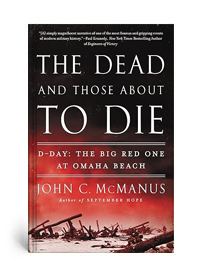

From the bookshelf!
Books I am reading and highly recommend.